How to generate a Data Matrix code
- Type or paste the text the code should carry — a part number, a serial, a URL.
- Pick a size, and square or rectangular if your label is long and shallow.
- Click Generate Data Matrix.
- Download as SVG for print and laser marking, or PNG / JPG for screens and documents.
Every code here is ECC 200. That is the current version of the standard and the only one to use for new work: its Reed-Solomon error correction lets a code still read when part of it is scratched, worn or covered.
What is a Data Matrix code?
A Data Matrix is a two-dimensional barcode that stores text in a grid of black and white squares, read by a camera or an imaging scanner. It is defined by ISO/IEC 16022, which writes the name as two words — Data Matrix — while software and barcode libraries usually write it as one, DataMatrix. Both names mean the same symbology.
It holds up to 2,335 alphanumeric characters, 3,116 digits or 1,556 bytes, though most real codes carry far less: a part number, a serial, a short link. Its strength is density — it stays readable when printed very small, which is why it marks circuit boards, electronic components, surgical instruments, pharmaceutical packs and aerospace parts.
Data Matrix or QR code?
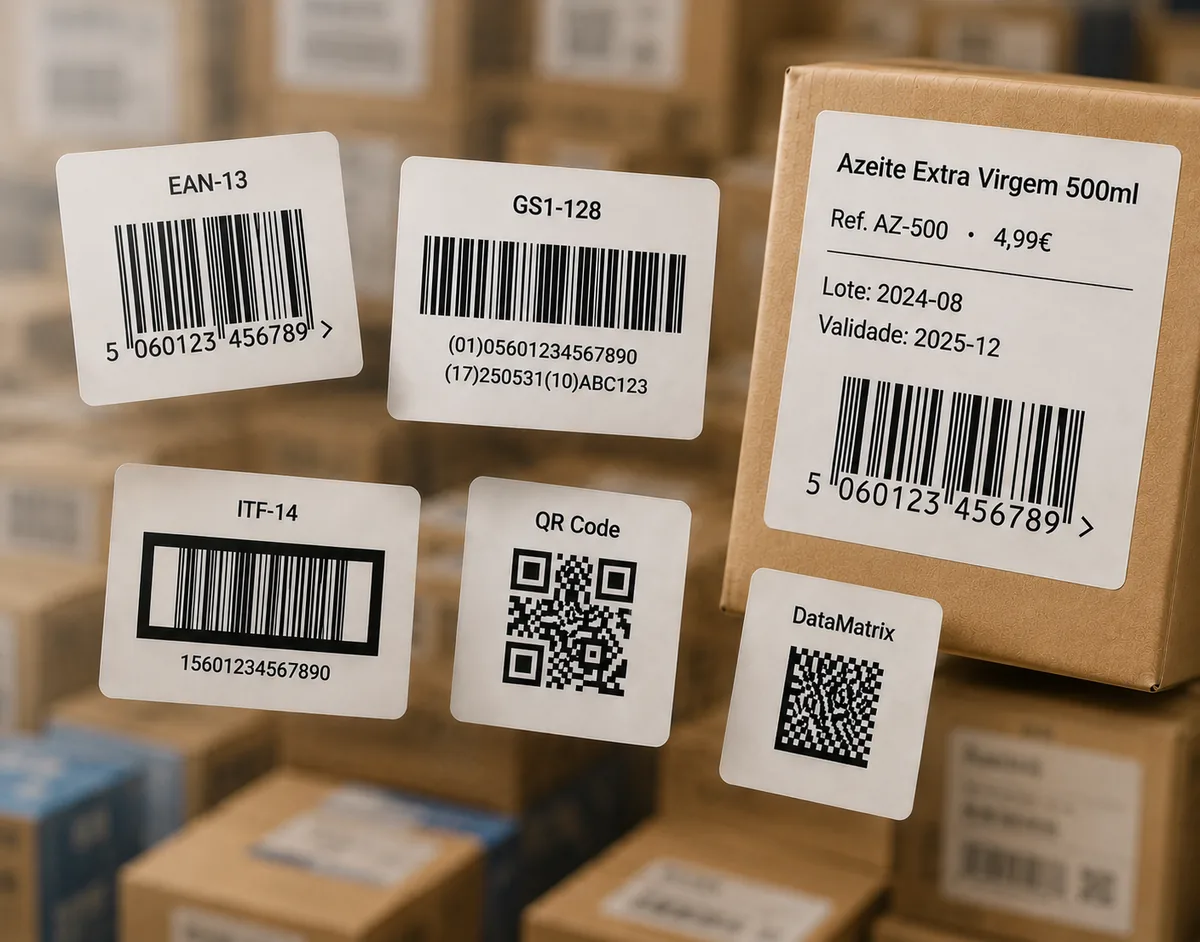
Both are 2D codes and both are read by a camera. Data Matrix fits the same data into a smaller area and survives being printed tiny, so it wins on parts and instruments where there is almost no room. A QR code is the one the public recognises and the one a phone scans out of the box, so it wins when a customer is the reader. If in doubt: Data Matrix for the factory, QR code for the shop.
Square and rectangular (DMRE)
A Data Matrix is square by default. The rectangular extension — DMRE, Data Matrix Rectangular Extension — fits a long shallow strip instead, which is what you need on a cable label, a pen, a syringe or a narrow component. Choose Rectangular above to get one. Older scanners do not all read rectangular codes, so test with your own hardware before a large run.
Printing and direct part marking
Keep the encoded text short, print with strong dark-on-light contrast, and leave a clear quiet-zone margin of at least one module on every side. Use SVG for anything laser-marked or printed large. For direct part marking on metal or plastic, where contrast comes from etching rather than ink, ask your marking supplier what module size their reader needs, and always test-scan with the scanner that will do the job.
GS1 data needs a GS1 DataMatrix
The generator above makes a plain Data Matrix, and a plain Data Matrix keeps whatever you type as text. Paste (01)05601234567892(17)250531 into one and the brackets are stored as literal characters: the code draws, it scans, and what comes back is that string with its brackets still in it. No system pulls a GTIN out of it, because there is no GTIN field in there — only text shaped like one. Nothing looks wrong on the label. It looks wrong at goods-in.
A GS1 DataMatrix is the same symbology with the GS1 rules on top: a leading FNC1 character and application identifiers, so the receiving system can tell (01) from (17) and read each as a field. It is in the full generator, on the Pro plan.
Many free generators draw that string exactly as it comes, and say nothing.
This generator stops you. Type a value that begins with an application identifier and it refuses, explains why the brackets would be stored as text, and points you at the code that does carry GS1 data. It does not draw the barcode and leave you to find out at the warehouse.